
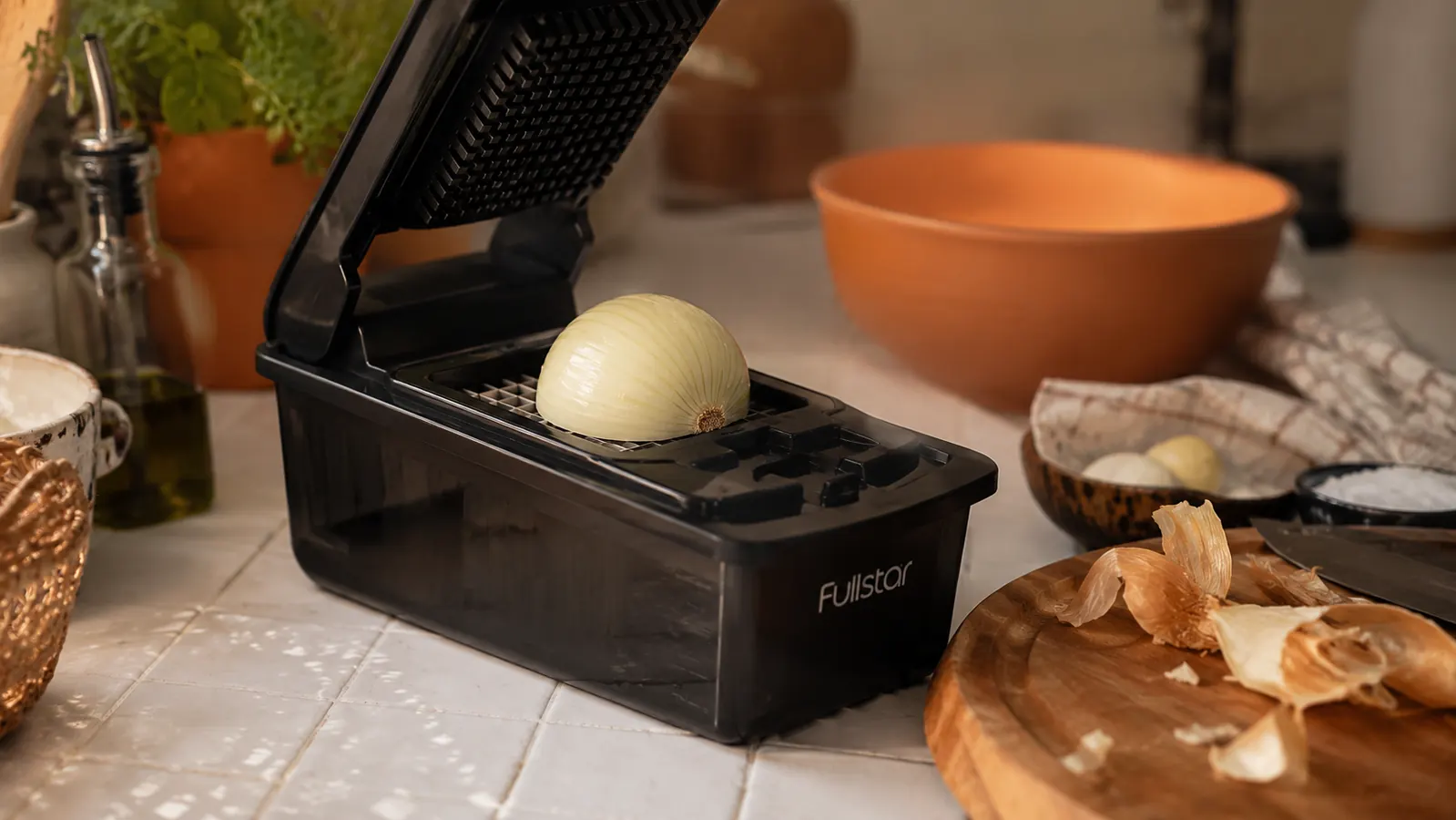
The Fullstar Pro Chopper has 128,148 ratings on Amazon as I write this, and a 4.5-star average. That is an enormous number of people weighing in. So why does everyone I know who bought one have a different story? Some keep it on the counter and use it three times a week. Others shoved it in a cabinet after two uses and forgot about it. The product is the same. The kitchens are different. And the listing will not tell you which category you are going to fall into.
I am Ray. I have been cooking real meals at home for more than thirty years, long enough to have strong opinions about what earns its keep versus what just takes up drawer space. I bought the Fullstar Pro Chopper, put it through the paces, and talked to enough other home cooks about it to understand why the experience varies so much. This review is about the stuff the product page skips.
The Quick Verdict
A genuinely good chopper for the right kind of cook, priced fairly and built better than it looks. But there is a specific vegetable set it handles well and a specific cook it suits. Buy it for the wrong reason and it ends up in the donation pile by month two.
Amazon Check Today's Price →If onions and peppers are killing your prep time, this is the most direct fix at this price.
The Fullstar Pro Chopper is affordably priced right now on Amazon. Over 128,000 ratings, 4.5 stars. It is the most-rated vegetable chopper in this category for a reason. Check today's price before it moves.
Amazon Check Today's Price on Amazon →The Thing Nobody Mentions: There Is a Learning Curve
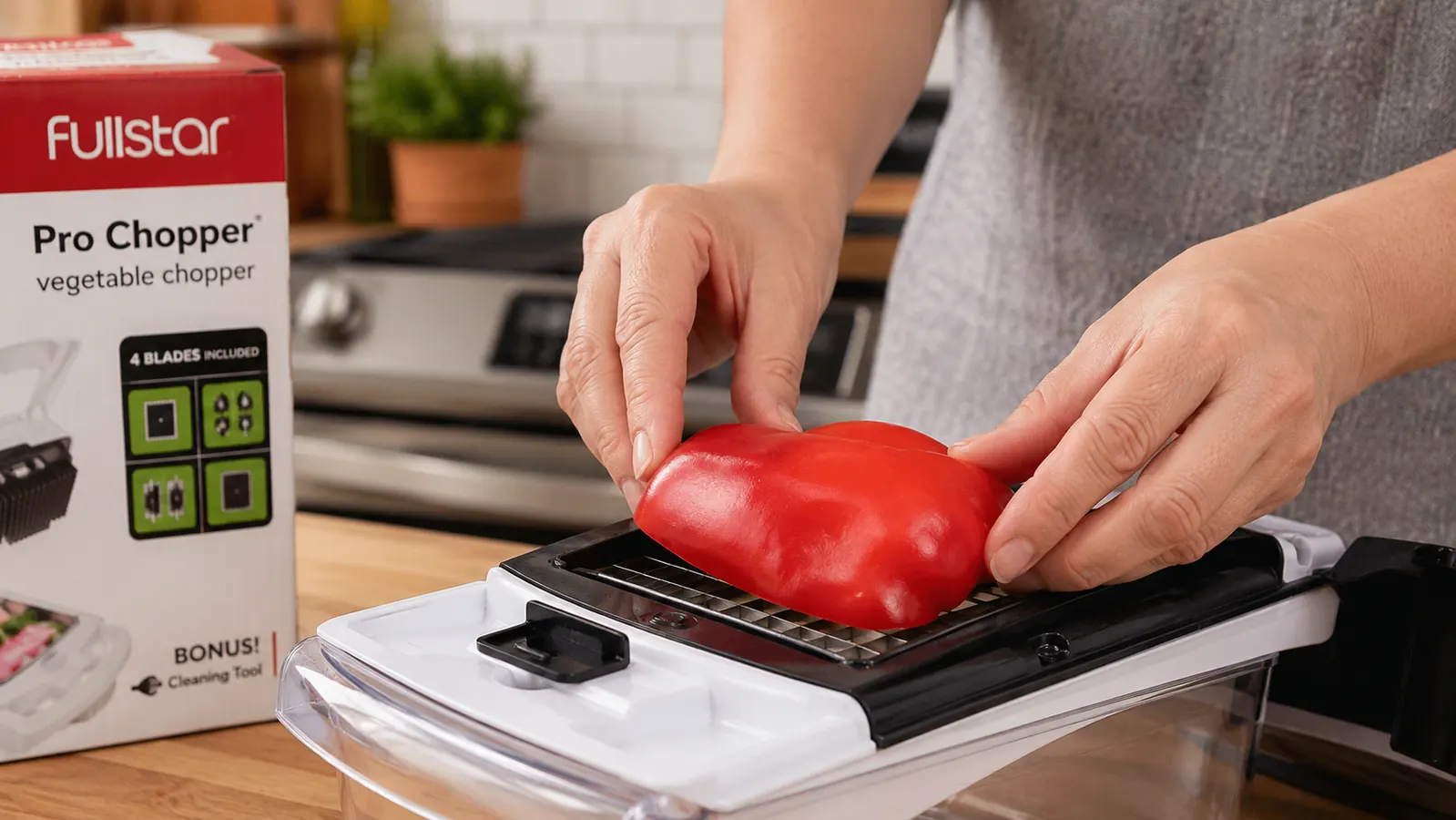
Most choppers look self-explanatory from the box. You put the vegetable on the grid, you press down, it falls through and you are done. That is more or less correct, but the execution takes a few tries before it clicks. The first time I used mine, the onion half slipped sideways and I got a partial cut. The second time I pressed with uneven pressure and got a lopsided dice. By the third session I understood: you need to apply pressure straight down with both palms flat, not one hand pushing from the side.
Positioning the vegetable matters too. An onion half should sit flat side up on the grid, so the cut face goes through cleanly. A bell pepper needs to be scored or you place it flesh-side down and score the skin before pressing. Most people figure this out by the second or third use, but the instruction sheet is thin on this kind of practical detail. If you expect to open the box and nail it on the first attempt, expect a slightly frustrating first session. Expect to understand it completely by the third.
I bring this up because the choppers that end up in donation bins are usually there because the buyer got a bad first result, assumed the product was junk, and gave up before the learning happened. Give it five sessions before you make a judgment.
The Noise Question
Nobody talks about the noise in the reviews I read, which is strange because it is noticeable. The press-through action makes a firm, sharp thwack when the vegetable clears the grid and the lid hits the container rim. Not loud enough to wake a sleeping kid in the next room, but noticeable enough that my wife looked up from her coffee the first morning I used it. This is the nature of any push-through chopper. The blade does not slice gradually, it presses and then releases all at once.
If you live in an apartment with thin walls, or you do a lot of early morning prep before anyone else is up, this is worth knowing. It is not a dealbreaker. It is a real detail the listing photographs do not convey.
What It Gets Genuinely Right
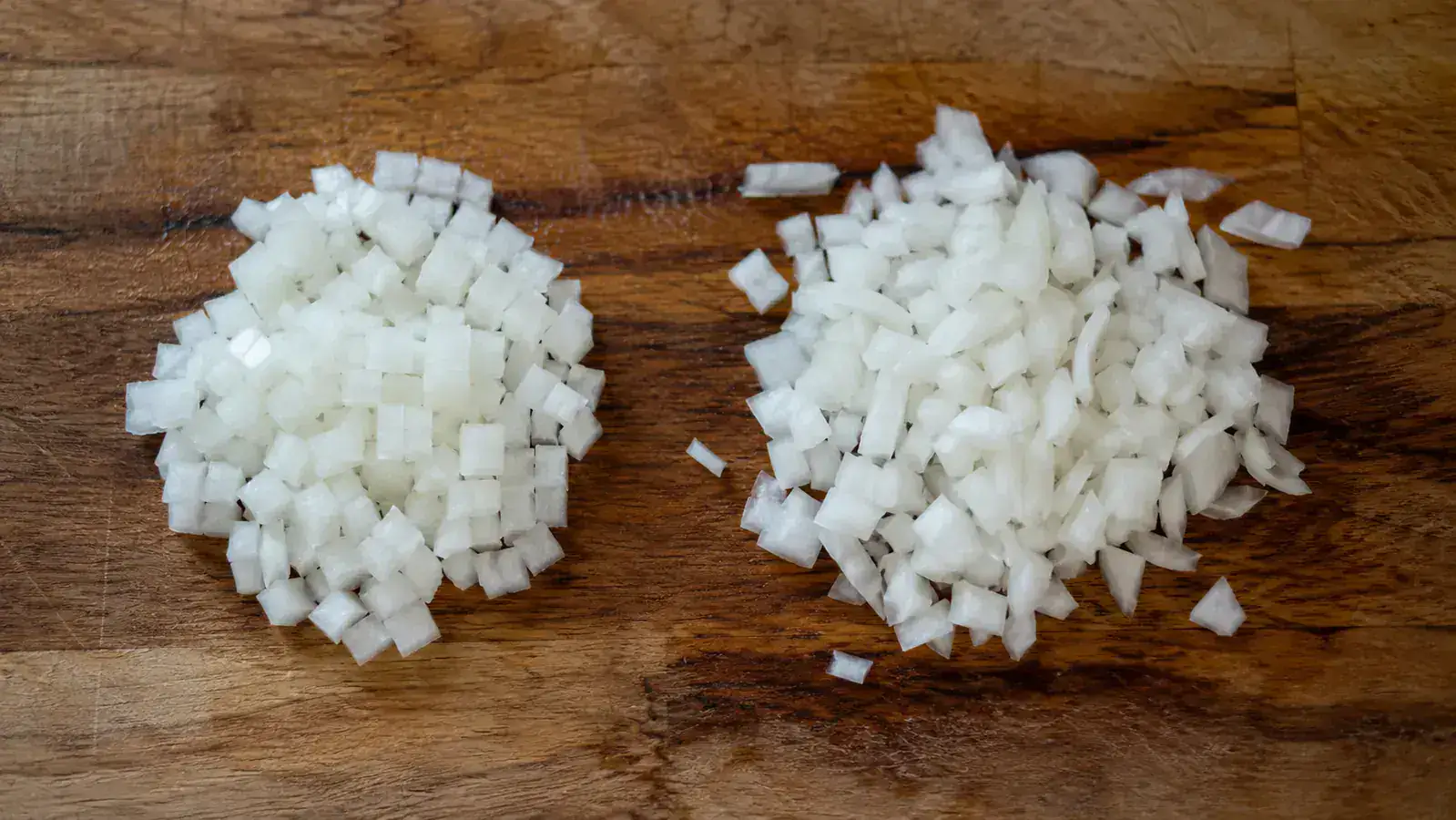
The onion performance is the headline and it deserves to be. A medium yellow onion halved and pressed through the fine-dice grid comes out in uniform quarter-inch cubes in about four seconds. The pressing motion is quick enough that your eyes barely register the fumes before you are done. That alone is worth the price for anyone who cooks with onions regularly.
Bell peppers are nearly as good once you understand the skin-scoring technique. Red and orange peppers, which are softer than green, go through with almost no resistance. Green peppers are firmer and need a bit more pressure. Mushrooms are a pleasant surprise: slice them into thick rounds first, then press through, and you get a quick mushroom dice that works beautifully in omelets, soups, and sautees.
The blade quality genuinely surprised me. Push-style choppers have a reputation for going dull fast. The Fullstar uses stainless steel inserts, and after a solid run of regular use, the grid still cuts through a fresh onion cleanly without pressing down hard enough to feel like work. That longevity is not guaranteed with the budget plastic choppers at a lower price point.
The onion performance alone justifies the price. Four seconds from half to uniform dice, no tears, no mess. That is the one thing this tool does better than anything else in its class.
The Vegetables That Beat It (Be Honest With Yourself About Your Kitchen)
Cherry tomatoes are the most common disappointment. The skins grip the grid and the fruit compresses before it cuts. You end up with squashed halves and juice on the counter. If you cook a lot of cherry tomato dishes, this chopper will frustrate you for that task specifically. Use a knife for tomatoes.
Raw carrots thicker than half an inch require enough force that it starts to feel like you are doing the work the blade should be doing. Thick-cut potato cubes are similar. The chopper can handle them, but the effort level rises considerably compared to onions and peppers. If root vegetables are a major part of your weekly cooking, factor that in.
Herbs are a non-starter. Do not try to run parsley or cilantro through this grid. That is not what it is for, and the result is herb paste stuck in the blade gaps. The Fullstar is a chunky-dice tool. For fine herb work, you still need a rocking knife motion or a mezzaluna.
The Container Size: Feature or Limitation Depending on How You Cook
The collection container holds about 1.7 cups of diced vegetables. For a cook making dinner for two, that is typically one full vegetable before you need to empty it into a bowl and continue. Some reviewers call this a flaw. I see it differently. The container is exactly the right size for a single-meal dice, which keeps it compact, lightweight, and easy to store. The issue is not the container. The issue is the mismatch between what the buyer imagined and what the tool actually is.
If you are batch cooking for a family of five or doing large-volume weekly prep across eight or ten vegetables at once, you will spend a lot of time transferring. In that case you want a larger-base chopper with a bowl that holds four or five cups, and you will pay significantly more for it. If you are cooking for two to four people and doing routine daily or weekly prep, the 1.7-cup container is genuinely fine. Know which category you are in before you order.
Build Quality: What Holds Up and What Does Not
The blade insert is the strongest part of this tool. Stainless steel, well-seated in its plastic spine, and it has not bent or dulled under regular use. The container and base are solid BPA-free plastic that feels more substantial than most budget gadgets.
The one place the build quality shows its price point: the lid-to-container snap fit. Fresh out of the box the snap is firm and secure. After several months of dishwasher cycles, the tolerance loosens slightly. The lid still seats and stays on during use, but if you pick up the full container and tilt it, hold the lid. It will not fall off during chopping. It might come loose during transfer. That is a real thing to know.
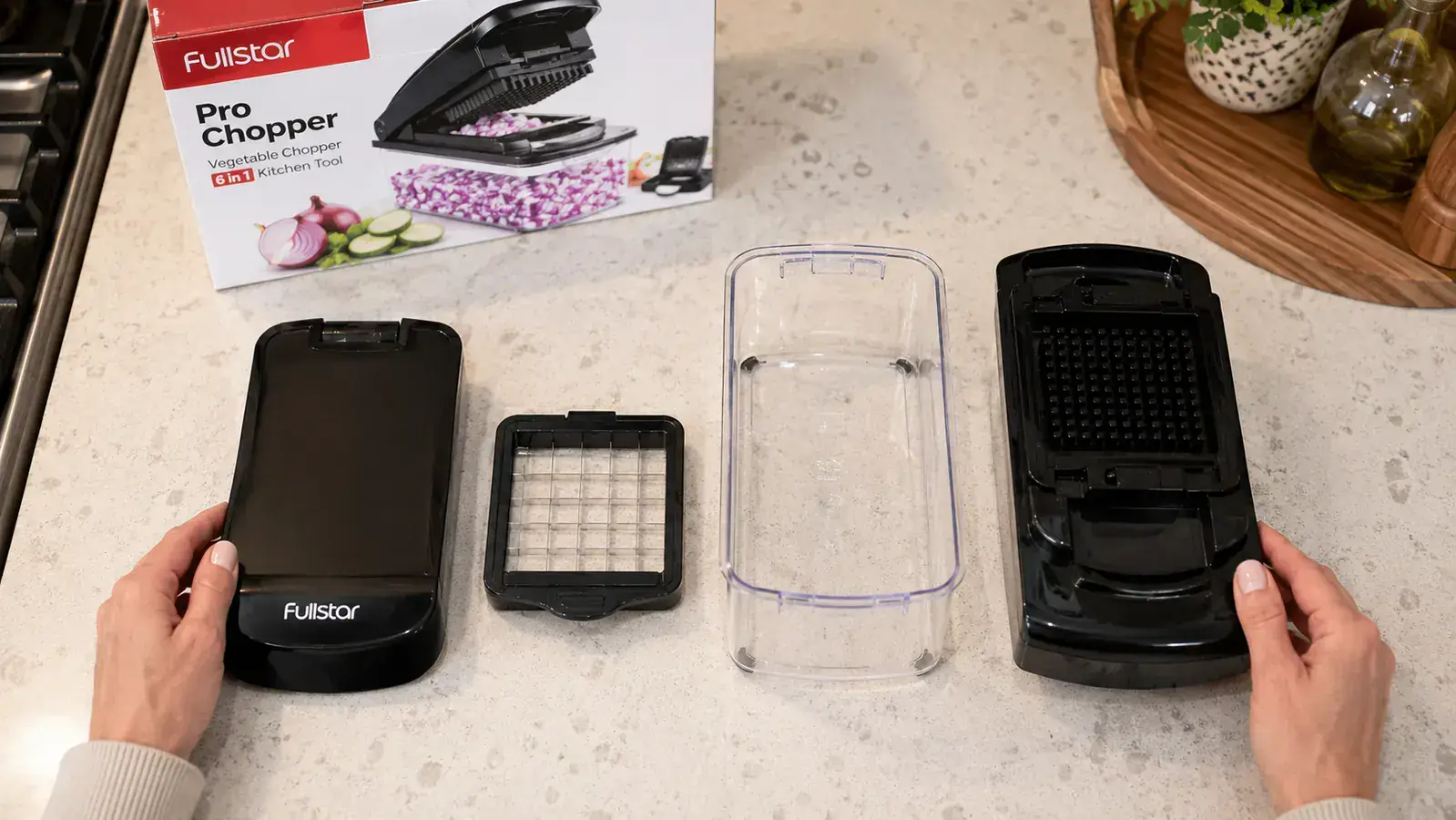
Cleanup is genuinely fast. The four components separate completely, all go in the dishwasher top rack, and the blade grid clears easily with a brush under running water if you prefer hand washing. Onion smell releases quickly because none of the surfaces are porous. I have never regretted using this tool because of the cleanup. That is not something I can say about every kitchen gadget I own.
What I Liked
- Onion and bell pepper dice is fast, uniform, and practically tear-free
- Stainless steel blade holds its edge through extended regular use
- Four-piece disassembly with full dishwasher compatibility, cleanup under a minute
- Compact footprint stores easily in a drawer or on the counter without dominating the space
- Priced low enough that it is a realistic impulse buy that actually pays off if you cook often
- Mushrooms, shallots, and celery all chop cleanly with correct positioning
Where It Falls Short
- Learning curve is real: first two sessions require experimentation with positioning and pressure
- Cherry tomatoes and soft round produce slip and squash rather than dice cleanly
- Thick raw root vegetables like carrots and potatoes require considerable pressing force
- Lid-to-container snap loosens over time in the dishwasher, requires hand on lid when tipping a full container
- Container size is appropriate for one to two servings, large-batch cooks will find it limiting
- Press-through action makes a sharp noise that may be an issue in quiet early-morning kitchens
Who This Is For
The Fullstar Pro Chopper belongs in the kitchen of someone who cooks real meals from scratch at least three or four nights a week and who regularly works through onions, peppers, or celery as part of that routine. It is especially well-suited to cooks who are competent enough to want a specific tool for a specific job, rather than someone hoping one gadget will replace all their knife work. If your week includes soups, stir-fries, casseroles, omelets, or fajitas, this chopper will shave time off prep and make those sessions less of a chore.
It is also a good fit for anyone who is not fully comfortable with a chef's knife. The uniform dice you get from a grid blade is actually more consistent than what a beginning cook produces by hand, and the learning curve on the chopper is shorter than developing real knife skills. If you are setting up your first real kitchen, or buying a gift for someone who is, this is practical, durable, and cheap enough to feel like a good call rather than a splurge. For context on the full range of what this tool adds to a weekly routine, the piece on Fullstar Pro Chopper: what 6 months of meal prep taught me covers the long view.
Who Should Skip It
If your cooking centers on cuisines that require very fine mince rather than uniform dice, like Thai stir-fries, Indian masalas, or French mirepoix for sauces, the grid blade produces chunks that are too coarse for those applications. An electric pull-cord mini chopper handles fine mince far better. They are similarly priced.
If you cook primarily large-batch meals and want to chop eight onions in one session without constant emptying, go up to a larger commercial-style chopper. The price difference is real but so is the time savings at that volume. And if cherry tomatoes, fresh chiles, or hard root vegetables make up most of your chopping, this particular blade profile is going to frustrate you more than it helps. Know your vegetable lineup before you buy. For a direct look at how this model stacks up against a major alternative, see the Fullstar vs Ninja food chopper comparison.
Right cook, right kitchen, right vegetables: this chopper earns its keep every week.
The Fullstar Pro Chopper is affordably priced right now on Amazon. If your kitchen is in the wheelhouse this review describes, onions, peppers, celery, and regular home cooking for two to four, you will use it constantly and never regret the purchase. 128,000 ratings is a lot of data points, and most of them land in the right direction.
Amazon Check Today's Price on Amazon →