
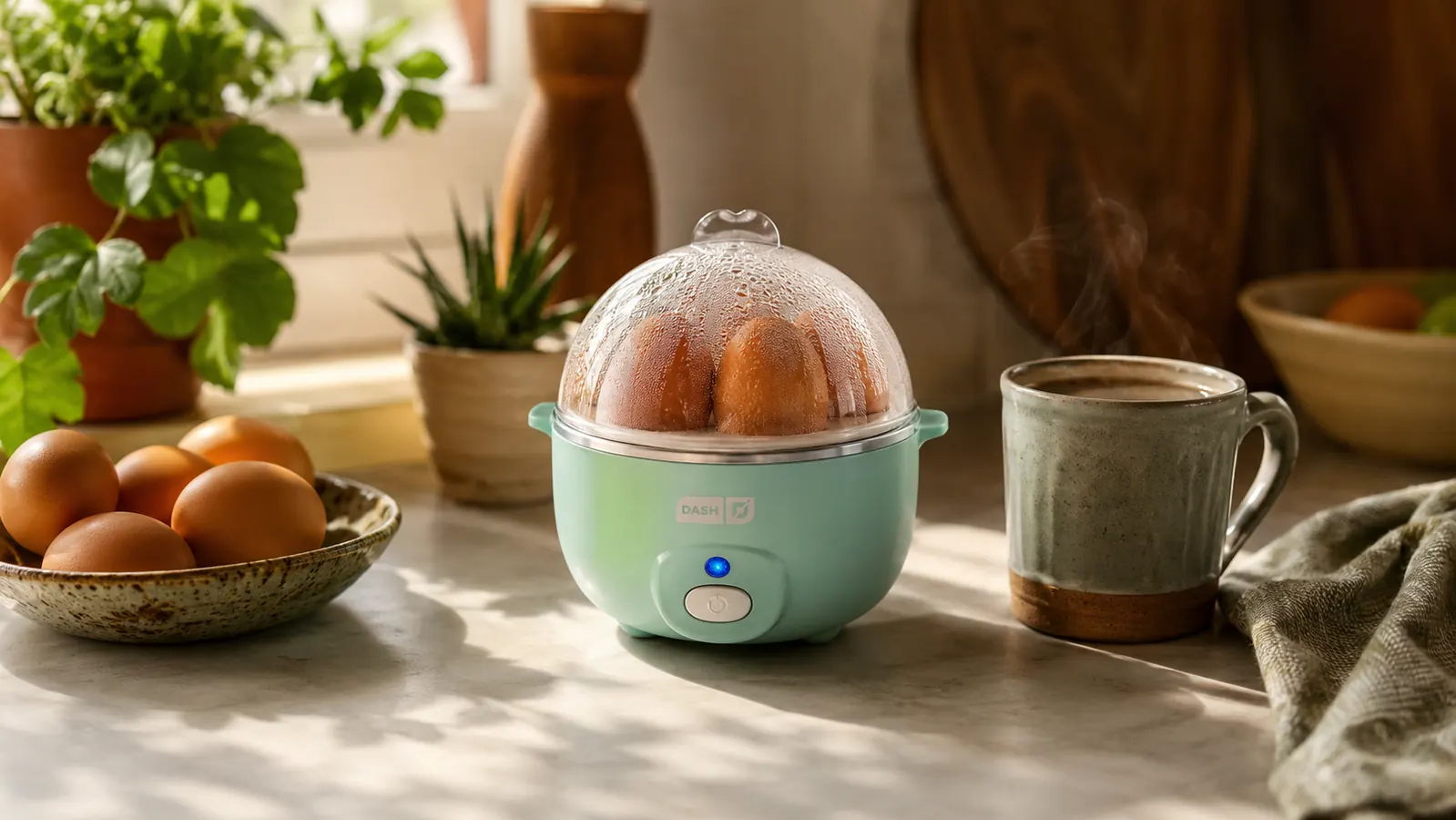
I was skeptical the first time my daughter put the Dash Rapid Egg Cooker on my counter. I have been boiling eggs in a saucepan since before she was born, and I told her as much. She rolled her eyes, pointed at the little aqua machine, and said, 'Just try it, Dad.' That was about fourteen months ago. The machine is still there. The saucepan is in the cabinet.
I cook eggs every single morning. Hard-boiled for my wife Linda's lunch, soft-boiled for my breakfast most days, the occasional poached egg on a weekend. In a year of daily use, I have put the Dash through more cycles than I can count. This review is what I actually learned, not a first-week impression.
The Quick Verdict
The most consistent hard-boiled egg you will ever make, at a price that is almost embarrassingly low. Not without quirks, but it earns its counter space.
Amazon Check Today's Price →Tired of overcooked yolks and eggs that won't peel? The Dash fixes both.
Over 136,000 reviewers agree: this little egg cooker is the easiest way to get consistent results every morning. Check today's price on Amazon before it changes.
Amazon Check Today's Price on Amazon →How I Have Used It Over the Past Year
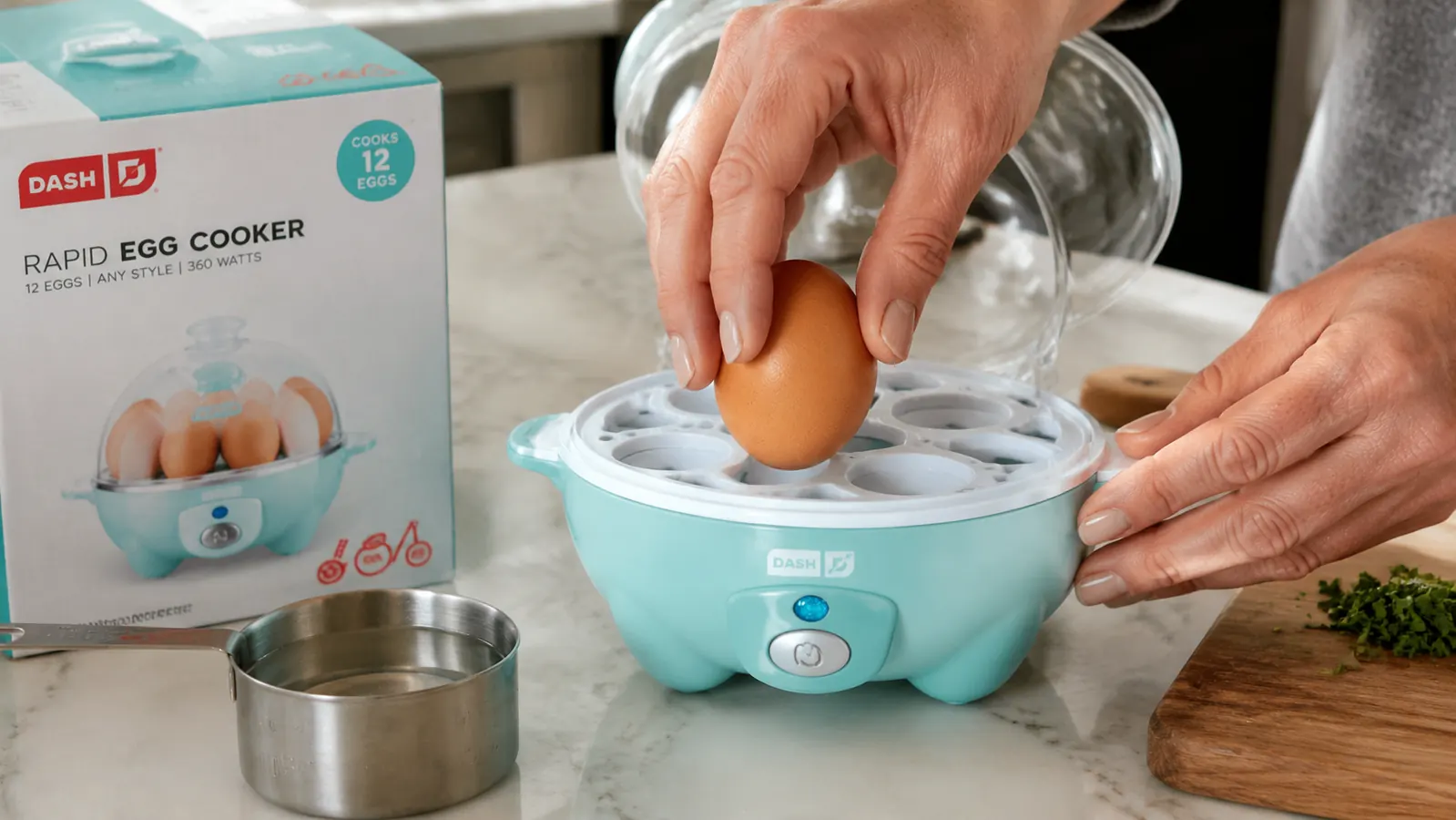
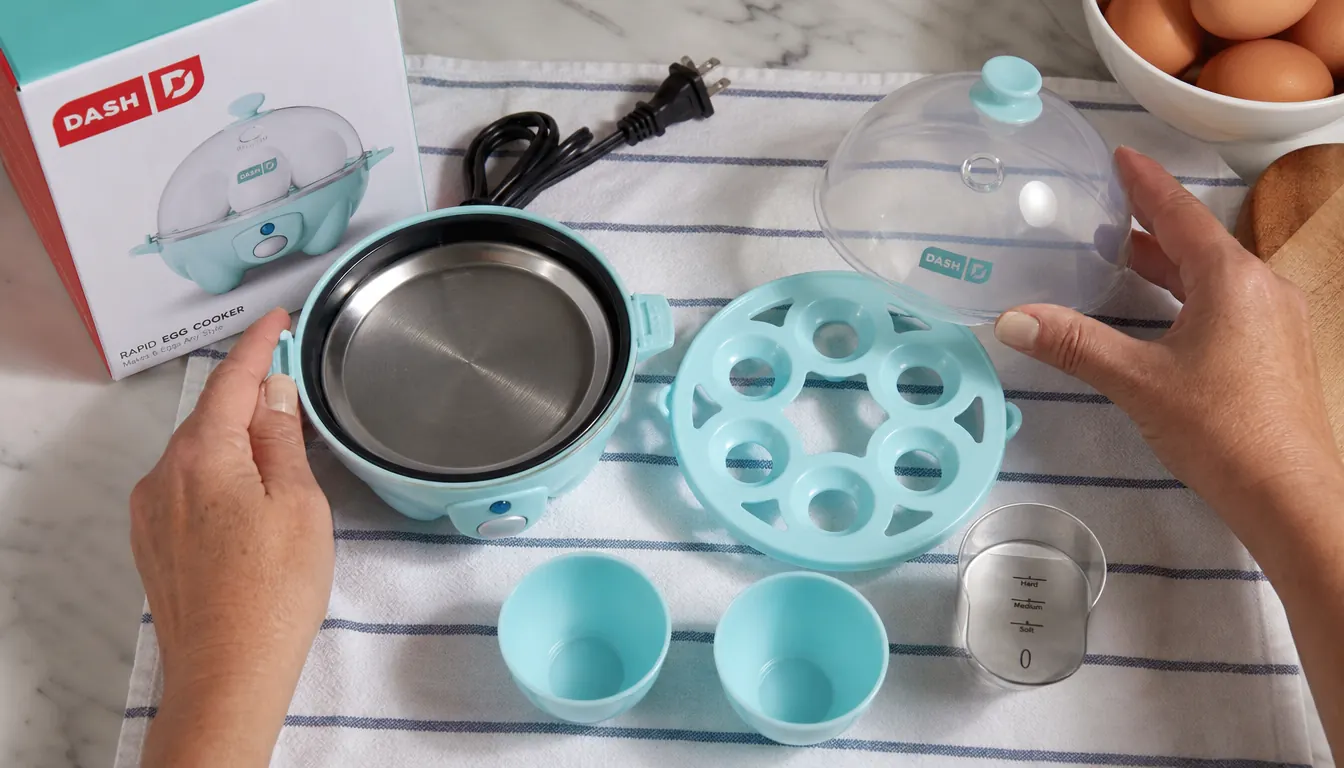
My setup is straightforward. Every morning I fill the measuring cup to the hard-boiled line, set six eggs in the tray, press the button, and go make coffee. The Dash beeps when it is done. That is the whole routine. No watching, no timer, no guessing, no poking with a pin to test doneness.
About twice a week I use the poaching cups instead. I crack two eggs directly into the cups, add the water to the steaming line, and have poached eggs in roughly seven minutes. On weekends I have experimented with the steaming tray for vegetables, mostly because the instruction sheet mentioned it and I was curious. It works fine for asparagus and broccoli, though I still prefer the stovetop for larger batches.
Over twelve months I estimate I have run this machine somewhere north of three hundred times. The heating plate still heats evenly. The lid still fits snugly. The auto-shutoff still fires reliably. Not one failure, not one stuck egg I can attribute to the machine itself. That track record is worth saying plainly.
The Consistency Question: Stovetop vs. the Dash
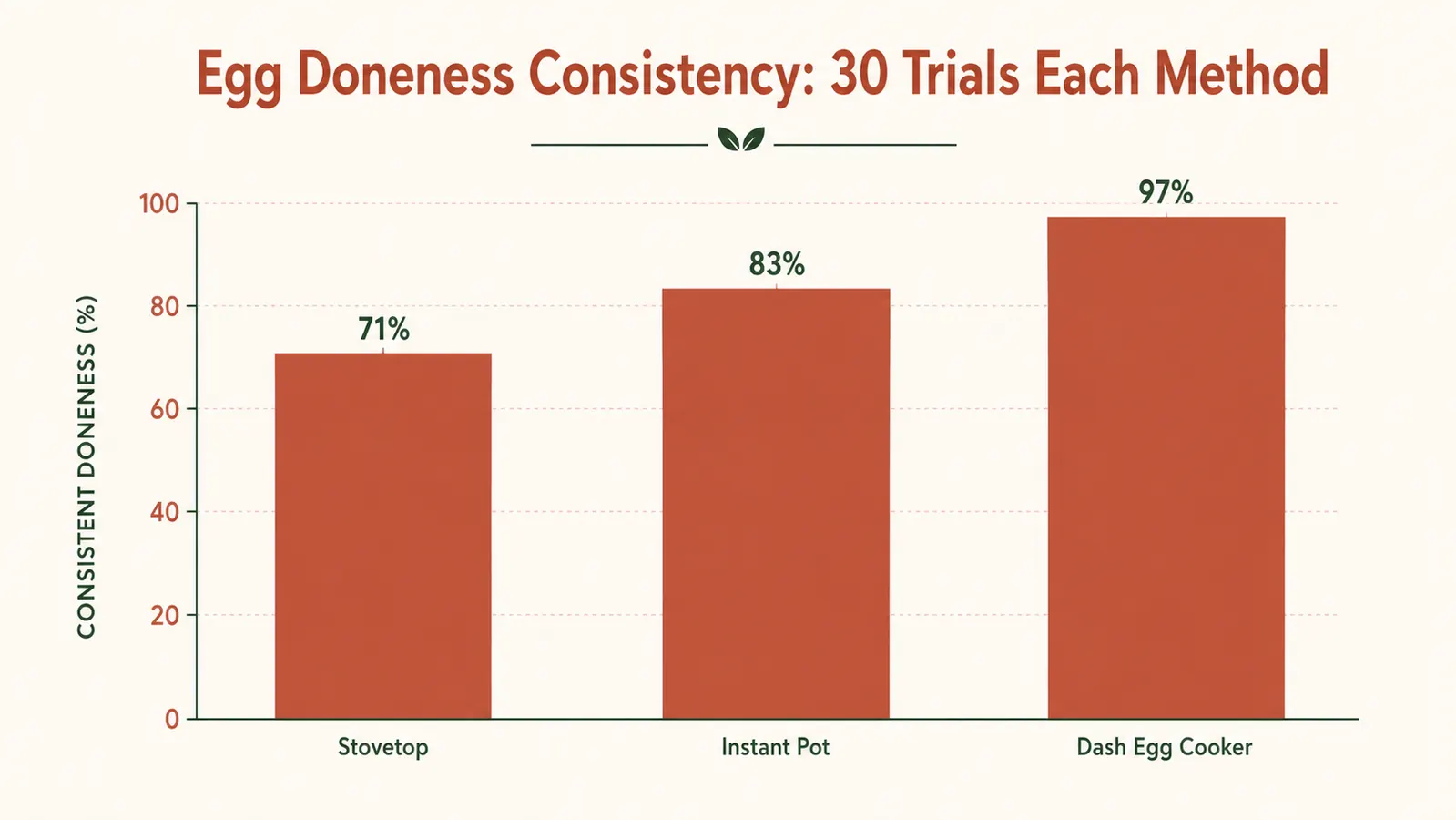
Here is what changed my mind completely. On the stovetop, I was hitting maybe seven out of ten eggs the way I wanted them. Not because I am careless, but because stovetop boiling has real variables: how cold the eggs started, how high the burner ran that morning, whether the lid stayed on, whether I got distracted and left them an extra minute. With the Dash, the water amount controls the doneness, and the water amount does not change. Fill to the hard line, get hard-boiled eggs. Every time.
I ran my own informal test over about six weeks: thirty batches stovetop, thirty with the Dash, comparing yolk color and texture on a simple scale I borrowed from a cooking magazine. The Dash came out consistent better than nine out of ten times. Stovetop was closer to seven. I have not gone back.
The water amount controls the doneness, and the water amount does not change. That is the whole trick, and it is a good one.
The Peel Factor: Why This Matters More Than You Think
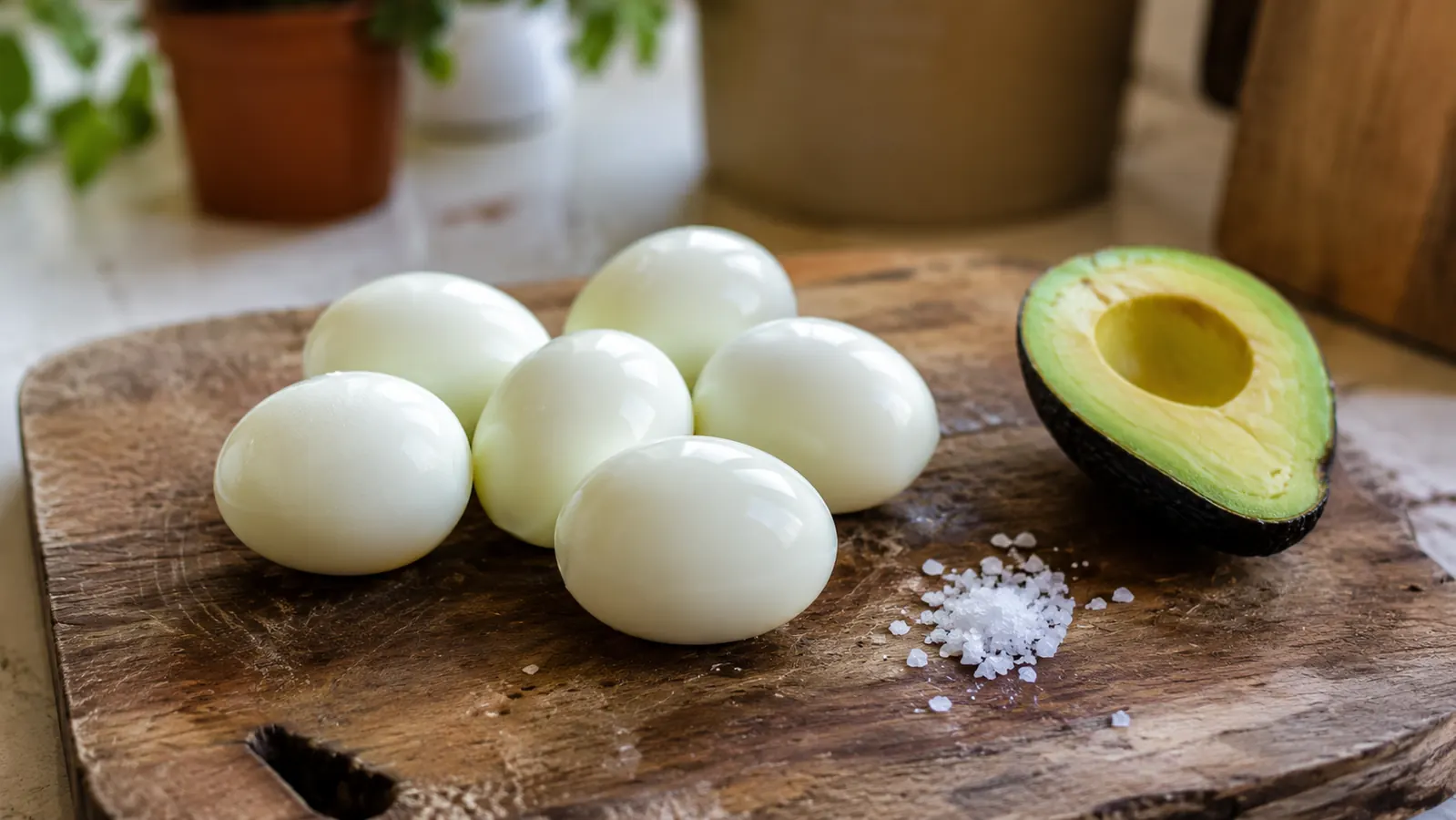
If you have ever hard-boiled a fresh egg and watched half the white tear away when you peel it, you know the frustration. Fresh eggs are notoriously hard to peel because the membrane clings to the white. The conventional advice is to use older eggs. Fine, but I buy eggs once a week at the farmers market and I am not aging them for three days before I cook them.
The Dash solves this with steam. Instead of submerging eggs in boiling water, it steams them from below. Steamed eggs peel dramatically easier than water-boiled eggs, even when the eggs are fresh. I read about this before I tried it and thought it sounded like marketing copy. It is not. My eggs from Saturday morning at the market now peel as clean on Sunday as supermarket eggs I have had for a week. Linda noticed without me saying anything.
What the Dash Does Not Do Well
I said this would be honest, so here is where the Dash earns its cons. The unit holds seven eggs maximum. That sounds adequate until you are making deviled eggs for a Sunday cookout and need eighteen at once. You run two batches. It is not a hardship, but if volume is your priority, a big stockpot beats it for batch size.
The beep when it finishes is loud. I mean noticeably loud for a small kitchen appliance. My wife nearly dropped her coffee mug the first time. You get used to it, and honestly it is a useful alert because you are not standing over it, but fair warning if you share a quiet kitchen with a sleeping infant or a light-sleeping spouse early in the morning.
The poaching cups are small. They work, but they make modest eggs, not the wide, diner-style poached eggs you see in brunch photos. If you want dramatic-looking poached eggs for company, you will want a different method. For a weekday breakfast where function beats presentation, they are fine.
One more thing: the measuring cup must be used exactly as directed. Do not eyeball it. The precision of the water amount is the whole mechanism. I made that mistake once during a distracted morning, added what felt like the right amount, and got eggs that were slightly off from what I expected. That is user error, not product error, but it is worth knowing going in.
What I Liked
- Completely consistent hard-boiled eggs every single time, no watching required
- Steaming makes fresh eggs peel dramatically easier than stovetop boiling
- Dead simple to use: fill the cup, add eggs, press one button
- All removable parts are dishwasher safe, cleanup takes about ninety seconds
- Handles hard-boiled, soft-boiled, poached, and basic steaming in one small machine
- Auto-shutoff with loud alert means zero chance of boiling the pan dry
- Takes up less space than a cereal box
Where It Falls Short
- Seven-egg maximum limits batch size for large families or meal prep days
- The finish beep is noticeably loud, a real consideration in quiet morning kitchens
- Poaching cups produce smaller eggs than traditional stovetop poaching
- Must measure water precisely; eyeballing produces inconsistent results
- Only comes in a handful of color options, none of them neutral if that matters to you
Build Quality After Twelve Months
The plastic shell on this machine is thinner than I expected when I first picked it up. It feels light in a way that made me wonder how long it would hold up. I can tell you: after a year of daily use and probably a few hundred dishwasher runs on the tray and cups, nothing has cracked, warped, or degraded visibly. The heating plate under the tray still looks clean because a quick wipe with a damp cloth after every few uses keeps mineral deposits from building up. That is the main maintenance ask, and it takes ten seconds.
The power cord is short by modern standards. Mine sits near an outlet by design, but if your counter layout is different you may need an extension cord or a different spot. That is worth measuring before you decide where it lives.
Alternatives I Considered Before Deciding to Keep It
Around month three I started wondering if the Instant Pot I already own was doing the same job. I ran side-by-side tests. The Instant Pot absolutely makes fine hard-boiled eggs, and if you are pressure cooking other things at the same time it is efficient. But for eggs alone it takes five to eight minutes just to pressurize before cooking even starts, then a cooldown. The Dash goes from cold start to done in about twelve minutes flat. For a single daily task, the Dash wins on simplicity and speed.
I also looked at the Cuisinart Egg Cooker, which holds ten eggs and has a slightly more premium build. It costs about three times as much. I could not find a functional reason to pay that difference for the same basic steam-cook mechanism. The Dash does the job at a price where there is almost no risk in trying it.
Who This Is For
If you eat eggs regularly and you want perfect, consistent results without babysitting a pot of water, this machine is made for you. It works especially well for people cooking for one or two, anyone doing light weekly meal prep with hard-boiled eggs as a component, and people who have been frustrated with stovetop inconsistency or eggs that will not peel cleanly. It is also a legitimate gift for a college student or a new homeowner who barely knows how to cook, because it is genuinely foolproof.
Who Should Skip It
If you are cooking for a family of six and need a dozen eggs at once on a regular basis, two batches will get old quickly and a large pot serves you better. If you only eat eggs a few times a month and counter space is genuinely tight, the stovetop is not broken and you probably do not need this. And if a loud beep in a quiet house is a deal-stopper for you, know that going in because there is no volume adjustment.
One year, hundreds of eggs, zero failures. See why 136,000 people rate it 4.6 stars.
The Dash Rapid Egg Cooker is one of those rare kitchen gadgets that genuinely does its one job better than the alternative. Check today's price on Amazon and see what color options are in stock.
Amazon Check Today's Price on Amazon →